
Growing guide · Herb
How to Grow Borage
Days to maturity55 days
Spacing46 cm
TypeHardy / cool-season
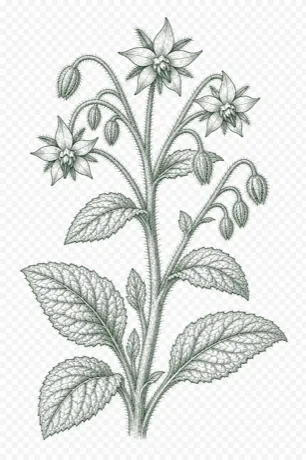
Borage is a fast-growing hardy annual with bristly leaves and vivid blue, star-shaped flowers. It is especially valued as a bee plant, while its edible blooms make cheerful decorations for salads and summer drinks. Expect volunteer seedlings where it has seeded freely.
When and how to sow
Sow borage directly from April to June, once the soil is workable and severe frost has passed. It dislikes root disturbance, so choose its final site in sun and ordinary, free-draining soil. Sow seeds 2 cm deep, then thin plants to 45 cm apart as they grow. In northern areas, a later May sowing avoids cold, waterlogged ground.
Care
Water seedlings until established, then only during dry spells. Borage needs little feeding and grows best without rich treatment. Its stems become tall and sprawling, so give plants space or support them with short canes. Remove faded flower heads if you want fewer self-sown seedlings next spring.
Common problems
Aphids, including blackfly, sometimes gather around young stems and can be washed away with water. Powdery mildew may appear late in summer, particularly on crowded or drought-stressed plants. Keep plants spaced, water at soil level and remove heavily affected leaves. Bristly foliage can irritate sensitive skin, so wear gloves when clearing plants.
Harvest
Pick the youngest leaves while they are tender, as older leaves become coarse and very bristly. Gather open blue flowers gently as required for salads or drinks, preferably in the cool morning. Use both promptly for their best appearance. Remove spent plants before seed drops where self-sowing is unwelcome.
Growing Borage: frequently asked questions
When should I sow borage in the UK?
Sow borage directly from April to June, once the soil is workable and severe frost has passed.
What are common problems when growing borage?
Aphids, including blackfly, sometimes gather around young stems and can be washed away with water.
When is borage ready to harvest?
Pick the youngest leaves while they are tender, as older leaves become coarse and very bristly.
General guidance for UK home gardens and allotments. Reference figures are typical values; your exact timing depends on your region, last-frost date and variety. Page updated 18 Sep 2026.