
Growing guide · Vegetable
How to Grow Horseradish
Days to maturity150 days
Spacing46 cm
TypeHardy / cool-season
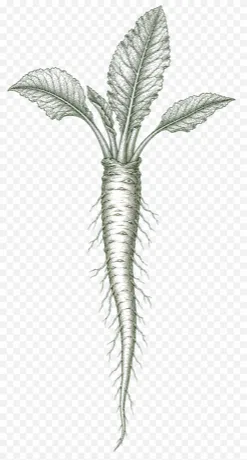
Horseradish is a tough perennial grown for its long, sharply flavoured white roots, traditionally grated into a sauce for roast beef. It is easy to establish and survives British winters well, but its spreading roots demand firm boundaries. A contained plant is usually enough for a household.
When and how to sow
Plant horseradish root cuttings, often called thongs, in March or April. Choose deep, moist but free-draining soil in sun, loosening it well so roots develop cleanly. To prevent spread, grow one cutting in a large bottomless bucket sunk into the ground, or use a substantial pot. Set the cutting at an angle and cover it with soil.
Care
Water in dry spells during the first season and keep the container or bed weed-free while plants establish. Horseradish needs little attention thereafter, although a spring mulch of organic matter supports steady growth. Remove flower stems if desired and keep neighbouring beds clear of wandering shoots and root fragments.
Common problems
Poor drainage is the main cause of disappointing roots, as waterlogged soil encourages rot. Flea beetles, slugs and occasional caterpillars may mark foliage, but vigorous plants usually recover. Protect young leaves with fleece where damage is persistent. The key task is containment: remove every unwanted root piece promptly.
Harvest
Lift roots from October onwards, once the foliage begins to die back. Ease the soil open with a fork and take the thickest roots, retaining a small piece only if you want the plant to return. Wash roots after lifting and use them soon for fullest flavour.
Growing Horseradish: frequently asked questions
When should I sow horseradish in the UK?
Plant horseradish root cuttings, often called thongs, in March or April.
What are common problems when growing horseradish?
Poor drainage is the main cause of disappointing roots, as waterlogged soil encourages rot.
When is horseradish ready to harvest?
Lift roots from October onwards, once the foliage begins to die back.
General guidance for UK home gardens and allotments. Reference figures are typical values; your exact timing depends on your region, last-frost date and variety. Page updated 19 Sep 2026.